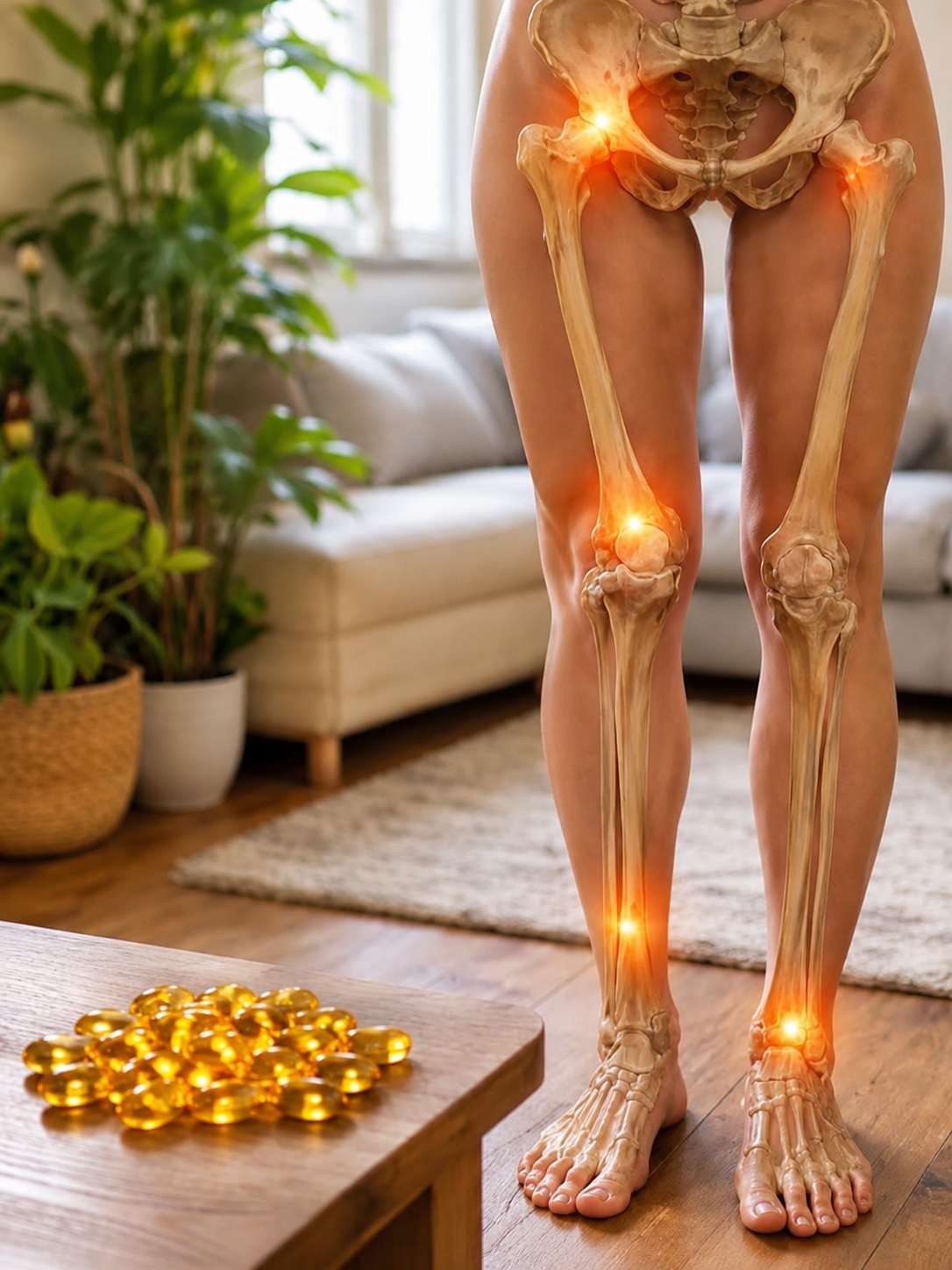
Do your legs ache at the end of the day? Do your knees, hips, or bones sometimes feel uncomfortable for no obvious reason?
There is one important vitamin that many people overlook when thinking about strong bones and muscles: Vitamin D.
Vitamin D plays a major role in helping your body absorb calcium and maintain healthy bones. When your body doesn’t get enough of it, your bones and muscles can eventually feel the effects.
And here’s why this vitamin deserves a place in your daily routine.
Why Vitamin D Matters So Much
Think of calcium as one of the building blocks of your bones. But your body needs vitamin D to absorb calcium efficiently.
That’s why these two nutrients work together.
Vitamin D contributes to normal bone mineralization and is also involved in healthy muscle function. A prolonged deficiency can lead to weaker bones and, in severe cases, osteomalacia in adults.
This is also why paying attention to your vitamin D intake becomes increasingly important as you get older.
What Happens When Vitamin D Gets Too Low?
One interesting thing about vitamin D deficiency is that it may not always be obvious at first.
But when levels become very low, people may experience problems such as bone discomfort, muscle weakness, or painful muscles. Vitamin D deficiency in adults can cause osteomalacia, a condition associated with bone pain and muscle weakness.
So if your legs frequently feel weak or your bones seem more uncomfortable than usual, vitamin D is one nutrient worth knowing about.
But where can you get it?
5 Ways to Get More Vitamin D Naturally
Fortunately, vitamin D can come from several sources.
1. Fatty Fish
Salmon, trout, tuna, and mackerel are among the best natural food sources of vitamin D.
2. Egg Yolks
Egg yolks provide smaller amounts of vitamin D and can easily be included in breakfast or other meals.
3. Fortified Foods
Certain types of milk, plant-based beverages, cereals, and other products have vitamin D added to them. Check the nutrition label because amounts vary considerably between products.
4. Mushrooms
Some mushrooms provide vitamin D, particularly varieties that have been exposed to ultraviolet light.
5. Sunlight
Your skin can naturally produce vitamin D when exposed to sunlight. However, how much your body produces varies depending on factors such as season, location, skin pigmentation, age, and sun exposure.
The Vitamin D + Calcium Combination
Here’s another important part of the story.
Vitamin D shouldn’t be considered completely on its own.
Your bones also need calcium.
Foods such as yogurt, milk, cheese, sardines, tofu, and certain leafy green vegetables can contribute calcium to your diet.
Vitamin D helps your body absorb calcium, which is why getting enough of both nutrients is important for maintaining strong bones.
How Much Vitamin D Do You Need?
For most adults ages 19–70, the recommended daily amount is 600 IU (15 mcg).
For adults 71 and older, it increases to 800 IU (20 mcg) per day.
Food and sensible lifestyle choices can contribute toward these amounts, while supplements may be appropriate for some people.
More isn’t necessarily better, however, because excessively high vitamin D intake from supplements can be harmful.
A Simple Daily Routine for Stronger Bones
Supporting your bones doesn’t have to be complicated.
Build meals around nutritious whole foods, regularly include vitamin D and calcium sources, eat enough protein, and stay physically active.
Walking and appropriate resistance or weight-bearing exercise can also be valuable parts of a bone-healthy lifestyle.
Small habits repeated consistently can make a meaningful difference over time.
The Bottom Line
If you’ve been thinking more about your legs, muscles, or bone health lately, don’t overlook vitamin D.
It helps your body absorb calcium, supports normal muscle function, and plays an essential role in maintaining healthy bones. Severe deficiency can contribute to bone pain and muscle weakness.
The good news?
You can find vitamin D in foods such as fatty fish, egg yolks, fortified foods, and certain mushrooms—and your body can also produce it through sunlight exposure.
**Give your bones the nutrients they need today, and they may thank you for years to come.**
Leave a Reply